
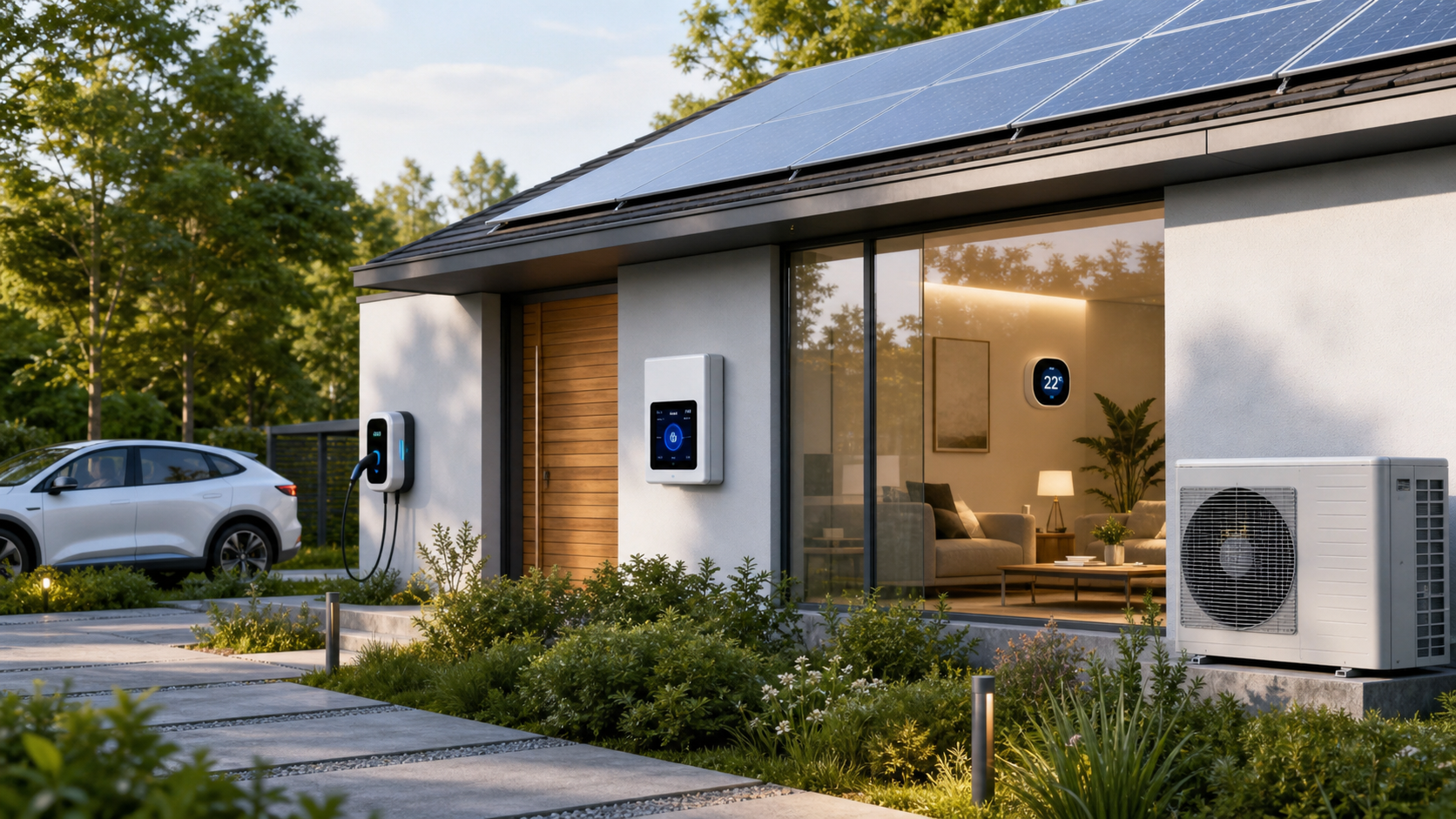
Smart home energy savings do not have to mean living less comfortably. The real benefit is timing: devices run when they are needed, reduce output when they are not, and avoid wasting power in empty rooms.
Climate Control Has the Biggest Impact
Heating, cooling, ventilation, and dehumidification often use more energy than lights or small appliances. Smart thermostats and climate sensors can adjust temperature based on occupancy, time of day, humidity, and open-window detection. The home can save energy when empty and return to a comfortable setting before people arrive.
Lighting Savings Come From Automation
LED lighting is efficient, but forgotten lights still waste power. Motion sensors in hallways, bathrooms, closets, and storage rooms can prevent lights from staying on all day. Scenes can also turn off unnecessary areas with one command when the family leaves or goes to bed.
Energy Monitoring Reveals Waste
Smart plugs, smart breakers, and energy monitors make hidden consumption visible. They can show which devices stay in standby, which appliances run too often, and where schedules can be improved. Water heaters, air purifiers, chargers, and entertainment systems are common candidates for smarter control.
Solar and EV Charging Can Be Integrated
Homes with solar panels, batteries, or EV chargers can go further. Automation can shift charging to low-cost hours, prioritize solar production, or reduce non-essential loads during peak demand. Over time, these small decisions add up.
The best energy automation is quiet and practical. It protects comfort while removing waste from the background.