
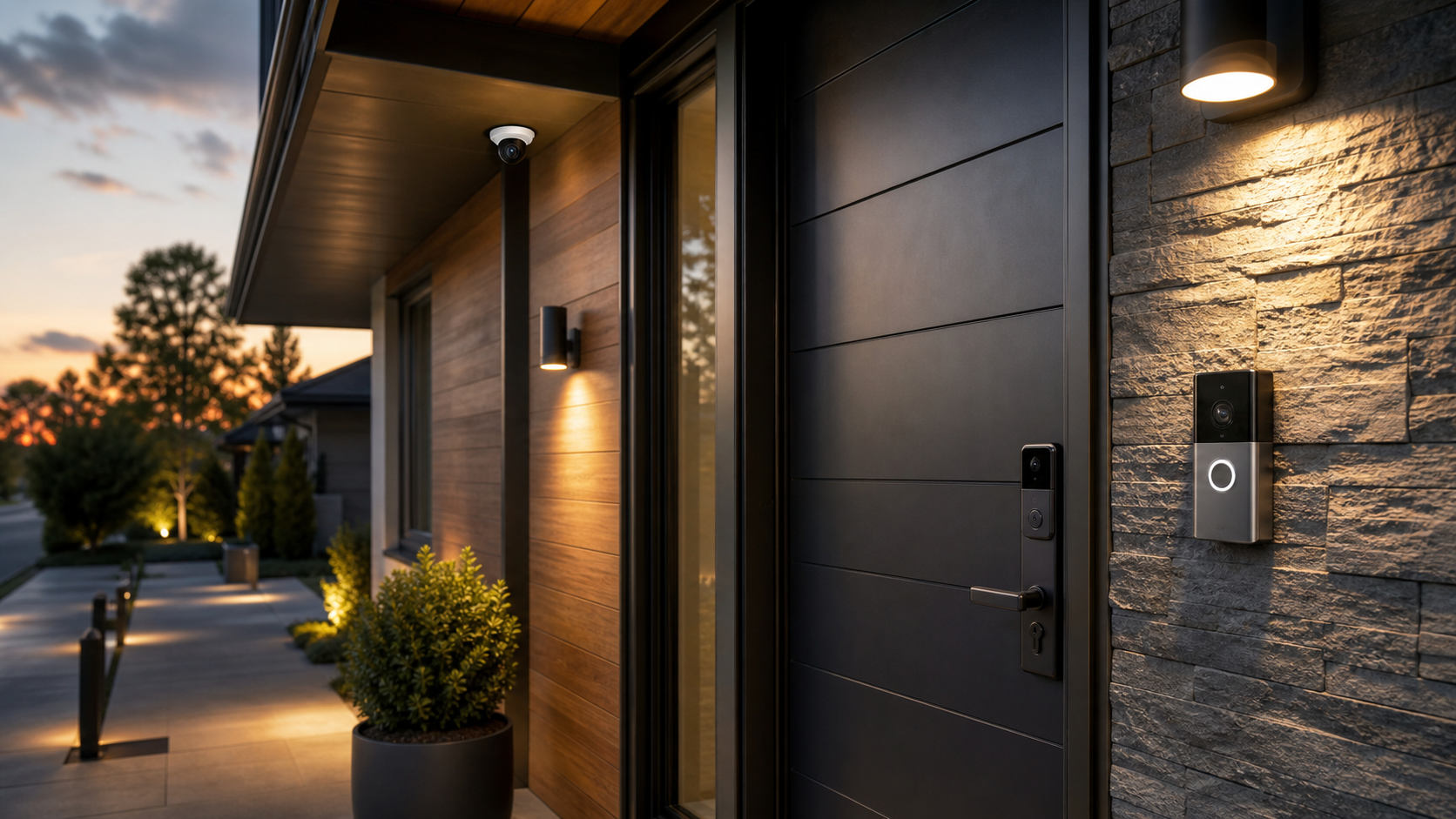
Traditional home security often depends on checking footage after something happens. A smart security system is more proactive. It can detect activity, send alerts, trigger lights, record important moments, and help homeowners respond faster.
The Entrance Is the First Layer
Smart locks and video doorbells protect the most active point of the home. A smart lock records when and how the door was opened, while a video doorbell shows visitors, deliveries, and unexpected movement near the entrance. Together, they reduce blind spots around the front door.
Sensors Fill the Gaps
Door and window sensors can detect unexpected openings. Motion sensors can identify activity after the home is armed. Smoke, gas, and water leak sensors protect against problems that cameras may never see. These small devices often provide the earliest warning when something is wrong.
Automation Makes Security More Useful
A good system can follow simple rules. When the home is set to Away mode, sensors arm automatically. If a door opens unexpectedly, lights can turn on and a notification can be sent. If a leak sensor detects water, the system can alert the homeowner and, where supported, close a smart valve.
Design for Privacy
Indoor cameras should be placed carefully, usually in shared areas rather than private rooms. Many families can cover most needs with sensors, smart lighting, and door status alerts instead of recording every space. Security should create peace of mind, not discomfort.
The strongest smart security setup is calm most of the time and decisive when it matters.