
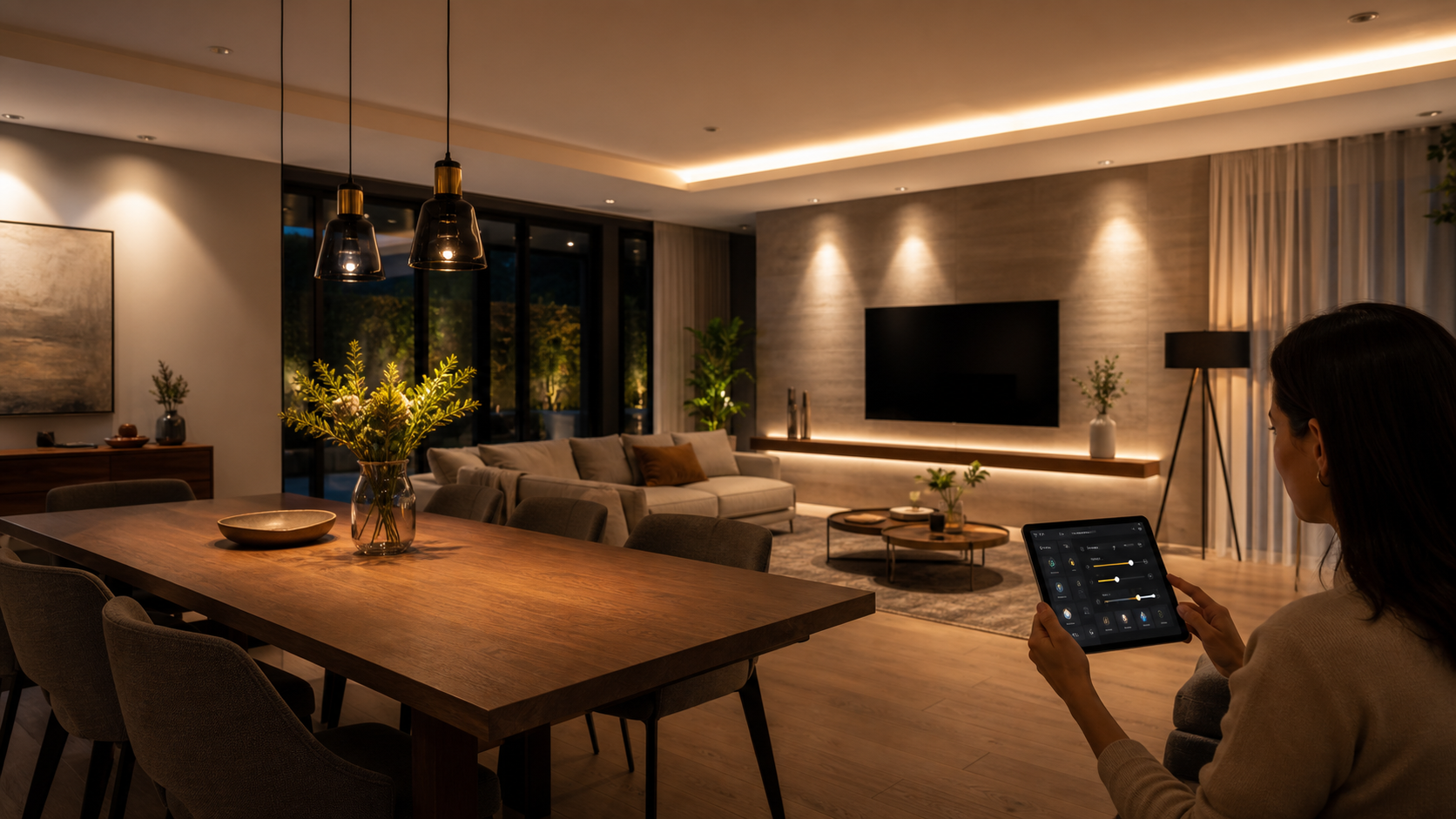
Smart lighting is often the easiest smart home upgrade to feel immediately. It is not simply about turning lights on from a phone. It is about creating the right atmosphere for different times, rooms, and activities.
Brightness and Color Temperature Matter
Bright, cooler light can help mornings feel fresh and focused. Warm, dimmer light is better for dinner, relaxing, and preparing for sleep. Late-night pathway lighting should be soft enough to protect night vision while still making movement safe.
Scenes Make Control Easier
Lighting scenes turn multiple adjustments into one action. A Movie scene can dim ceiling lights, turn on wall lighting, and close curtains. A Reading scene can brighten a lamp while keeping the room calm. A Dinner scene can soften the whole space without making it dark.
Sensors Make Lighting Feel Natural
Motion sensors are especially useful in entries, hallways, closets, bathrooms, and stairways. Lights can turn on when someone enters and switch off after the space is empty. At night, the same sensor can trigger a lower brightness level for comfort and safety.
Layer the Lighting
Great smart lighting starts with good lighting design. Ceiling lights, recessed lights, strips, wall lights, pendants, table lamps, and floor lamps all serve different purposes. Automation works best when the home already has layers to control.
When smart lighting is done well, people stop thinking about switches. The home simply feels right.