
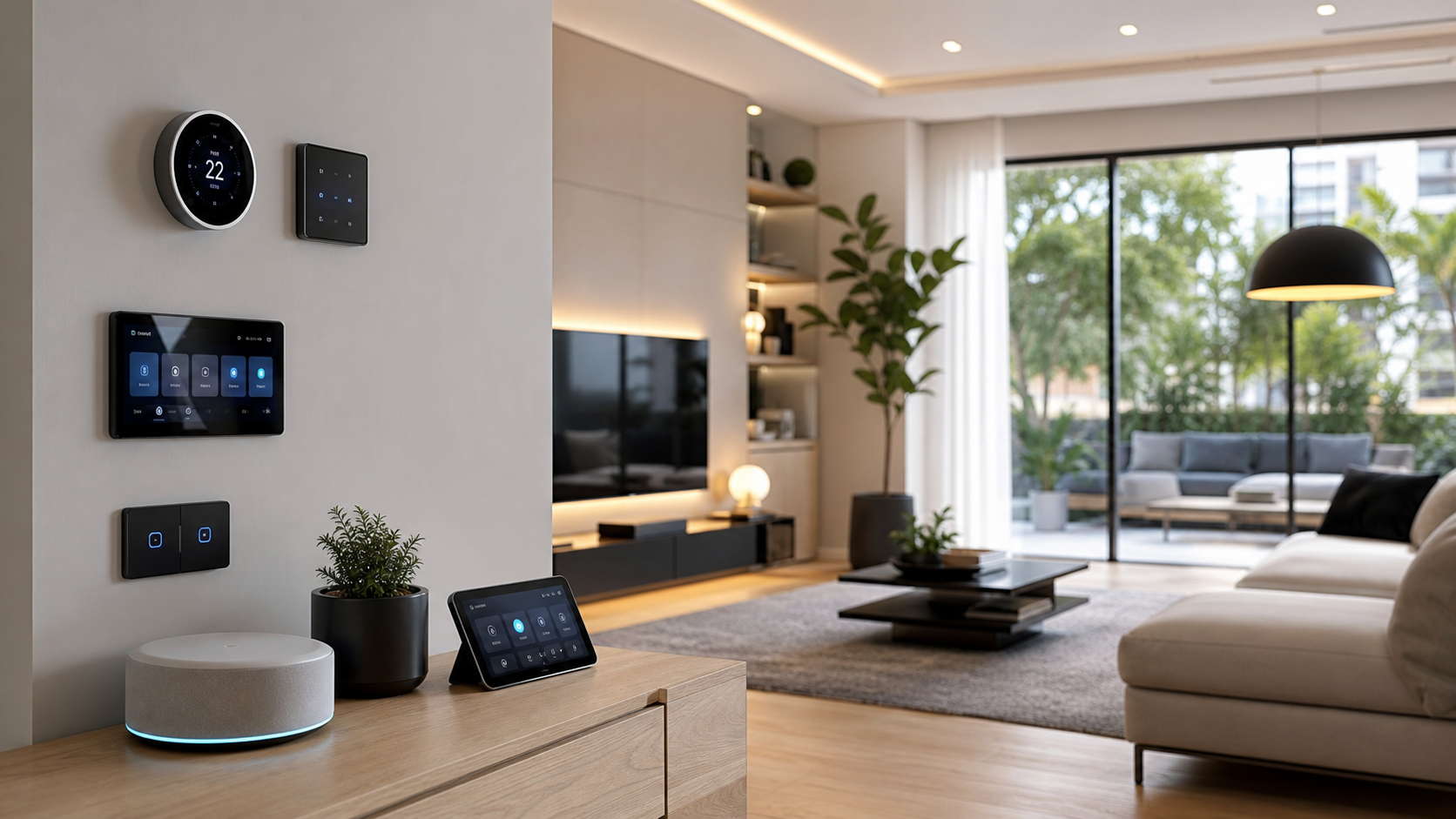
A smart home becomes truly useful when it feels simple. The goal is not to control every device from an app, but to make the home respond naturally to the way people live: arriving home, leaving, waking up, cooking, relaxing, sleeping, and staying safe.
Start With Daily Routines
Before choosing devices, map the routines that happen every day. A “Welcome Home” scene might unlock the door, turn on the entry and living room lights, adjust the thermostat, and open selected curtains. An “Away” scene can turn off unnecessary lights, reduce climate control, cut standby power, and arm security sensors.
Build a Stable Network First
Smart homes depend on stable connectivity. Large homes, thick walls, and multi-floor layouts need careful Wi-Fi, wired network, and hub placement. Cameras, touch panels, doorbells, thermostats, and sensors should all have reliable coverage so automations do not feel slow or unpredictable.
Balance Cloud and Local Control
Cloud services are useful for remote access, voice assistants, and app integrations. Local control is important for fast, dependable everyday actions such as lights, curtains, sensors, and switches. A stronger system uses both: cloud for convenience and local automation for reliability.
Leave Room to Expand
Needs change over time. Families add new rooms, new devices, and new routines. During renovation, plan extra neutral wires, outlets, network points, and sensor positions. For finished homes, wireless sensors, smart plugs, and retrofit switches can still create meaningful upgrades without major construction.
The best whole-home automation is almost invisible. It gives the right light at the right time, saves energy when nobody is home, and protects the house quietly in the background.